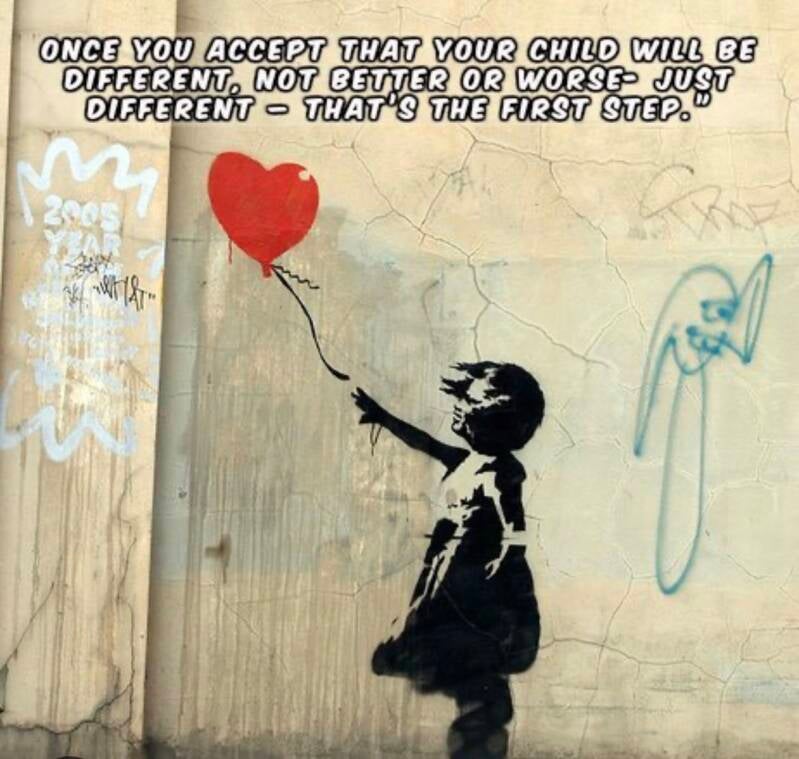
“Once you accept that your child will be different, not better or worse—just different—that’s the first step.”
There is an immense amount of quiet grief, fierce love, and profound courage living behind those words.
When you first realize your child’s development or needs look completely different from what you originally expected, it can feel like watching a red balloon float away into the sky. It is normal to experience a form of grief for the future you had pictured—all while holding tight to the incredible, unique child standing right in front of you.
Reframing Acceptance: It Isn't Giving Up
There is a common misconception that accepting a disability or diagnosis means resignation—that it means settling for less or giving up on progress.
In reality, true radical acceptance is the ultimate act of love and empowerment:
-
It honors who they are right now: Acceptance stops the endless cycle of trying to force a child into a mold that wasn't designed for them.
-
It relieves emotional friction: It allows you to celebrate their individual milestones on their own timeline, rather than measuring them against a neurotypical yardstick.
-
It shifts the responsibility onto the environment: Instead of asking "How can we fix or change this child?", acceptance asks "How must the world adapt to support this child?"
Accepting your child as "different, not worse" doesn't mean lowering expectations. It means loving them unconditionally while standing up to a system that needs to make space for them.
Turning Acceptance into Powerful Action
While you embrace and nurture your child's differences at home, the school environment and statutory support systems often lag behind. Too many educational settings operate under rigid structures that expect every child to fit standard molds, misinterpreting neurodivergent traits or sensory needs as deficits.
Accepting your child's reality is the first step; advocating for their right to an accessible education is the next.
Real advocacy takes that initial acceptance and translates it into tangible, legal support:
-
Securing Tailored Accommodations: Ensuring reasonable adjustments are written into classroom plans so your child isn't forced to mask or burn out.
-
Enforcing Legal Protections: Holding schools and local authorities accountable under the SEND Code of Practice and Equality Act to provide environments where neurodivergence is respected, not penalized.
-
Protecting Their Self-Worth: Building an educational pathway that builds confidence and preserves your child's identity, so they never feel they have to change who they are just to belong.
You Don't Have to Walk This Path Alone
Navigating the emotional journey of parenting a child with additional needs is hard enough without having to battle complex bureaucracy and inflexible school systems on your own.
As an independent SEND advocate, I stand beside parents to turn that deep acceptance into effective action. Together, we can ensure that local authorities and schools recognize your child's true strengths, accommodate their hidden challenges, and provide the unshakeable foundation they deserve.