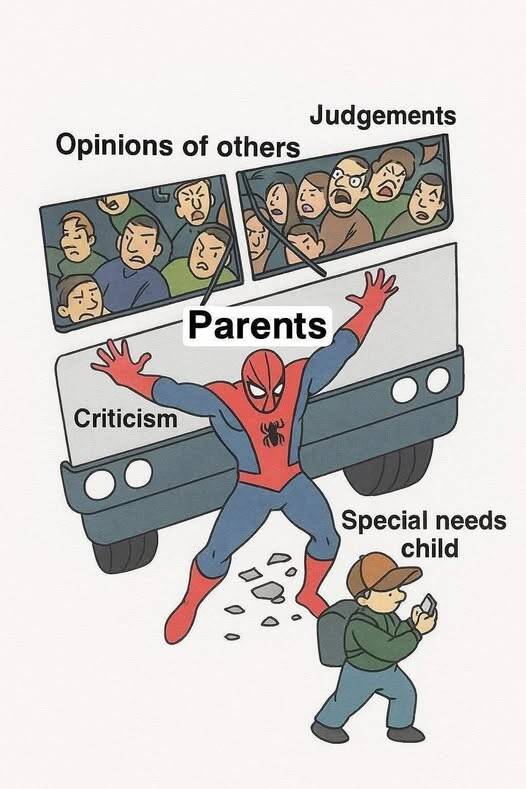
If you are raising a child with Special Educational Needs and Disabilities (SEND), you have likely seen this meme before—or, more accurately, you have lived it every single day.
The illustration shows Spider-Man stepping in front of a moving bus to protect a child who is obliviously walking by. The bus represents "Opinions of others," "Judgements," and "Criticism." The figure holding back the bus is labeled "Parents." The child walking safely ahead is a "Special needs child."
It captures a truth that few outside the SEND world truly understand: as a parent of a child with additional needs, your job isn't just about day-to-day caregiving, routine, and support. It is about constantly shielding your child from a world that wasn't built for them—and often doesn't hesitate to judge them.
The Weight of the "Bus"
Every parent wants to protect their child, but for parents of neurodivergent children or children with physical, sensory, or complex needs, the incoming noise is constant.
-
In Public Spaces: The stares at the supermarket when a sensory overload leads to a meltdown. The well-meaning (or outright rude) comments from strangers about "discipline" or "bad behavior."
-
In Educational Settings: The subtle (and sometimes explicit) messages that a child is "too difficult," "disruptive," or falling behind.
-
From Uninformed Observers: The unsolicited advice from family members, friends, or passersby who think they know what your child needs better than you do.
When society views a child through the lens of deficit or inconvenience, parents absorb the brunt of that impact so their child doesn't have to carry the emotional weight of being misunderstood.
Why "Shielding" Takes a Toll
While Spider-Man makes holding back a bus look effortless, real-life shielding takes an enormous physical, emotional, and mental toll on parents.
Living in a constant state of hyper-vigilance—anticipating sensory triggers, preempting negative interactions, advocating continuously at school meetings, and deflecting judgment—leads to profound parental burnout.
You spend so much energy ensuring your child feels safe, loved, and accepted exactly as they are that you often have little energy left for yourself.
From Defending to Empowering: Moving Forward Together
While absorbing the world's criticism protects a child in the short term, the ultimate goal is building a world where parents don't have to act as human shields just for their children to exist comfortably.
Here is how we begin to change the narrative:
1. Build Your Community
Surround yourself with people who "get it." Whether it's local SEND parent groups, online communities, or supportive professionals, finding people who understand the reality of your journey means you don't have to explain or justify your parenting choices.
2. Move from Defensive to Proactive Advocacy
Instead of constantly reacting to judgments, focus on getting structured, legally binding support in place. Ensuring school environments, support plans, and EHCPs are robust and tailored to your child’s actual needs creates a natural framework of protection that doesn't rely solely on your personal energy.
3. Normalize Setting Boundaries
You do not owe strangers, distant relatives, or onlookers an explanation for how your child navigates the world. Protecting your child also means protecting your own peace.
You Don't Have to Hold Back the Bus Alone
If you are feeling exhausted from standing between your child and a world that doesn't always understand them, remember that what you are doing is extraordinary—but you shouldn't have to do it entirely on your own.
Whether you need guidance navigating statutory SEND processes, getting an EHCP that truly protects your child's provision, or finding actionable strategies to support their transition between key stages, professional support is available to take the weight off your shoulders.
Need expert, independent SEND advice or an EHCP audit?
Get in touch today to book a free advice call.