Have you ever tried talking logic to your child mid-meltdown, only to feel like you’re shouting into a brick wall?
If so, you aren't alone. Those moments are heart-wrenching, overwhelming, and utterly exhausting. You’re desperate to help them calm down, but no matter how reasonable you are, nothing seems to reach them.
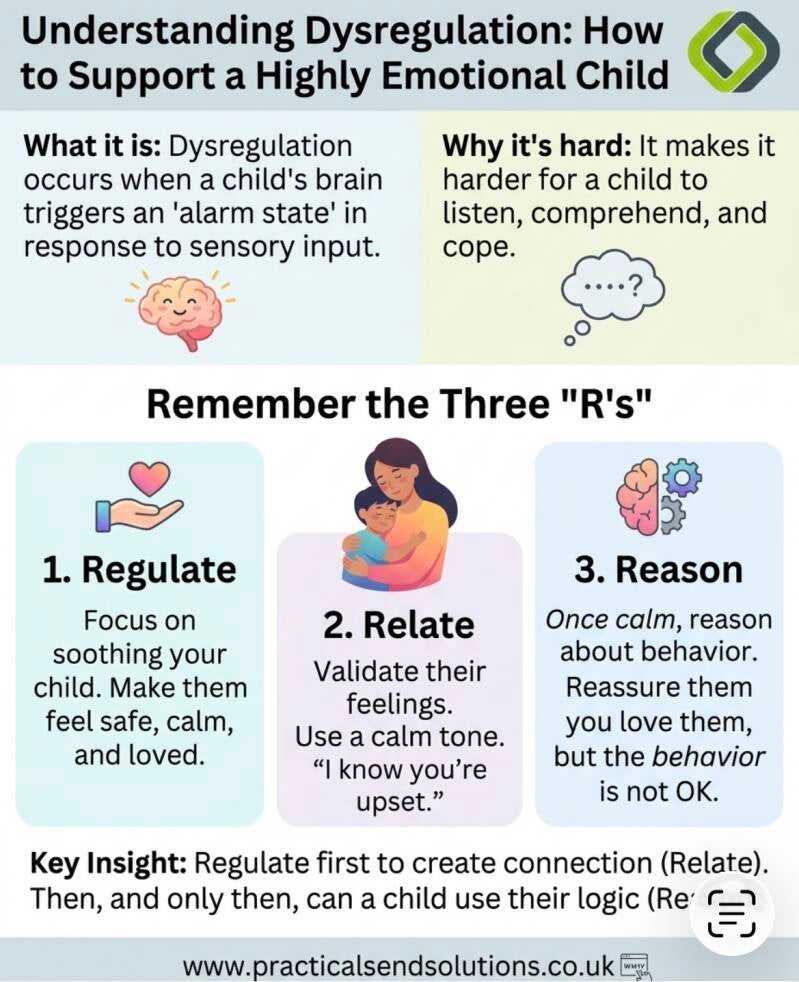
Here is the truth: when a child is dysregulated, their brain enters an "alarm state." In this mode, their nervous system completely takes over. They physically cannot listen, process information, or cope with rational arguments. They aren't trying to be difficult or defiant—their body is simply reacting to an intense stress response or sensory overload.
Before a child can access logic, they need safety.
The Three "R's" of Co-Regulation
To support a child in distress, we have to meet them where they are neurologically. A powerful framework for navigating these moments is the Three "R's": Regulate, Relate, and Reason.
1. Regulate
-
Focus on safety and calm first. When the brain's alarm system is firing, words won't work. Prioritize creating a calm environment and lowering your own voice and posture to help soothe their nervous system before attempting to fix anything.
2. Relate
-
Validate their feelings so they know they aren't alone. Connect with them emotionally using a reassuring, calm tone. A simple phrase like "I see you, and I know you're really upset right now" helps them feel understood rather than isolated.
3. Reason
-
Save the reflection for after the storm has passed. Only when your child is fully regulated and calm can they access the logical part of their brain. This is the time to talk through what happened, discuss safety boundaries, and brainstorm better ways to cope next time.
Moving from Misunderstood to Supported
As an independent Special Educational Needs and Disabilities (SEND) advocate, I see how often dysregulated children are misunderstood outside the home. In busy school environments or community settings, sensory overload and emotional distress are frequently mislabeled as "bad behavior" or intentional disruption, rather than a genuine need for sensory and emotional support.
When schools don't understand the underlying causes of dysregulation, children miss out on the specific provisions they need to thrive—and families are left carrying an extraordinarily heavy load by themselves.
You Don't Have to Fight for Support Alone
Your child deserves to be understood, accommodated, and supported through their challenges—not punished for a nervous system response they cannot control.
I’m here to stand beside you, ensure educational settings understand your child's true needs, and advocate for the right provisions so your family gets the support you deserve.